AI vehicle damage assessment for motor insurers: how it works and who uses it
AI vehicle damage assessment software lets a motor insurer judge vehicle damage from photos or video taken on a phone, without sending a surveyor. The policyholder, a garage or an agent captures the car. A computer vision model finds and grades each damaged panel and returns a repair-or-replace call, often with a cost estimate, into the insurer’s underwriting or claims system. Insurers use it in two places: pre-inspection before a policy is issued, and first notice of loss when a claim comes in. CamCom’s Vernier runs in production at insurers including HDFC ERGO, Bajaj Allianz, SBI General, Zurich in Indonesia and ERGO.
How AI vehicle damage assessment works
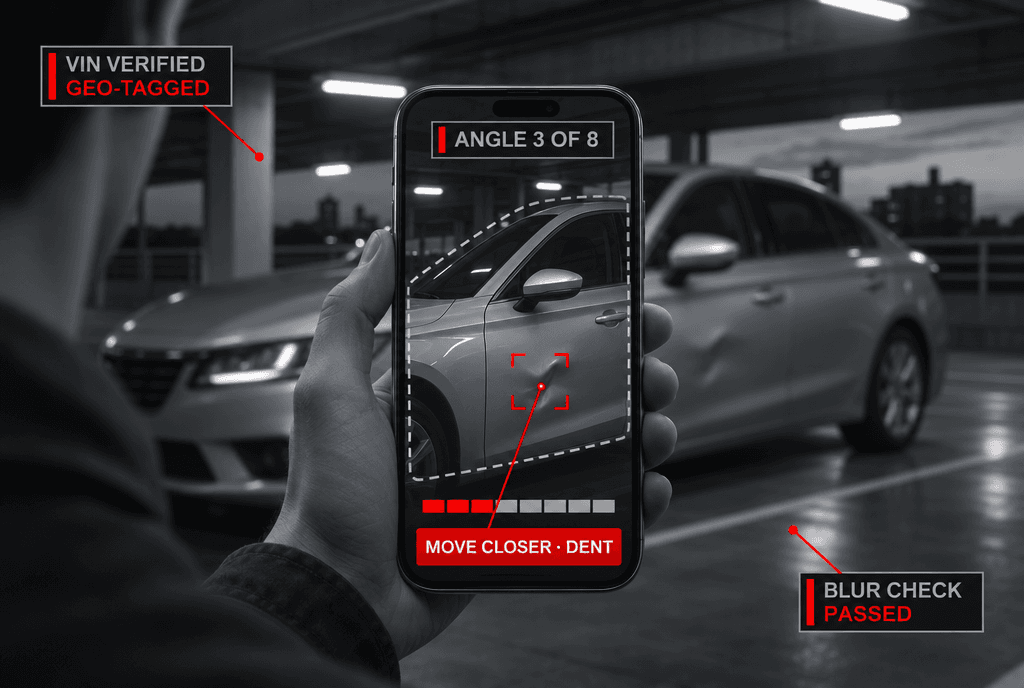
- Guided capture. The customer gets a link or opens the insurer’s app. The capture tool tells them which angle to shoot next, checks each photo for blur and framing, and can verify identifiers such as the VIN. CamCom’s capture tool is called TriNetra and runs on any smartphone.
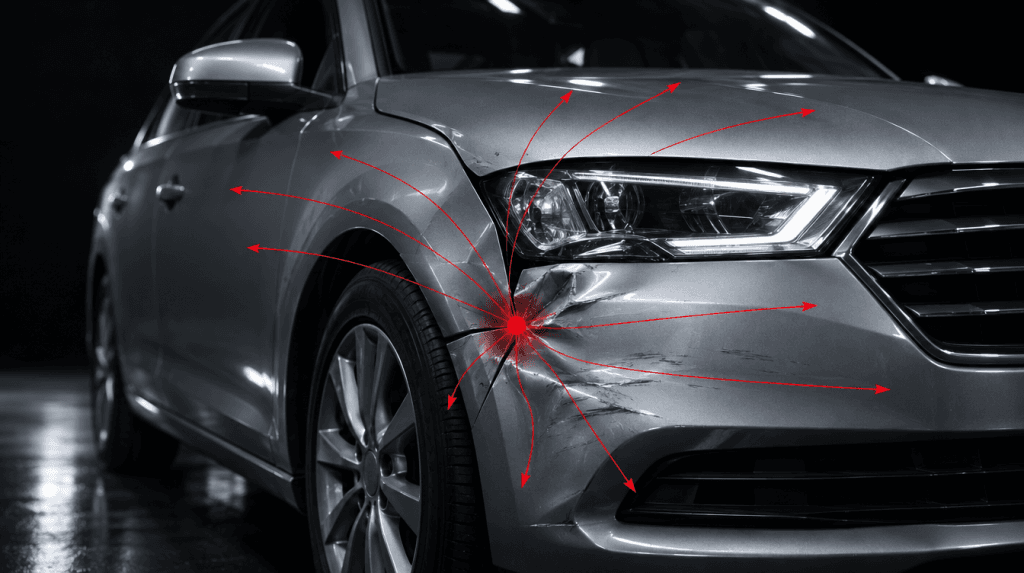
- Damage detection. The model finds each damaged part and classifies the damage: scratch, dent, crack, tear, broken glass or missing part.
- Severity and decision. Each finding is graded and mapped to a repair operation: repair, refinish or replace. For claims, those operations can be priced into an estimate.
- Fraud and consistency checks. Geotags, timestamps and image metadata help show that the photos are of this car, taken now. Prior inspection images make pre-existing damage visible at claim time.
- Integration. The result is sent as structured data into the policy admin or claims platform, so a clean case can move straight through and a complex one goes to a human handler.
Related reading: How a car insurance self-inspection app works
Where insurers use it: underwriting and claims
- Pre-inspection and break-in. Before a new policy is issued, or before lapsed cover restarts, the insurer needs a record of the car’s condition. AI inspection turns a surveyor visit that took hours to schedule into a few minutes on the customer’s phone.
- Claims at first notice of loss. The same capture at FNOL gives the handler a damage report and estimate on day one, and lets simple claims settle without a garage visit.
- Total loss triage. Early severity scores flag likely write-offs before the car is moved to a repairer. See car write-off categories.
Insurers using CamCom’s AI damage assessment
These are production deployments, each documented in a published case study or announcement:
- HDFC ERGO (India). Break-in inspection went from 8 hours to 5 minutes, mean accuracy rose from 83% to 98%, and inspection volume grew 273% over five years. Read the HDFC ERGO case study.
- Bajaj Allianz General Insurance (India). AI vehicle damage assessment for motor claims inspection, in production since 2019. Read the Bajaj Allianz case study.
- SBI General Insurance (India). More than 50% straight-through processing on motor claims, with the assessment integrated into a third-party claims workflow. Read the SBI General case study.
- PT Zurich Asuransi Indonesia. Vehicle underwriting and claims automated with TriNetra, with 93% damage assessment accuracy and under five minutes end to end. Read the Zurich Indonesia case study.
- ERGO Insurance Thailand. Launched an AI car inspection platform with CamCom in February 2024. Read the announcement.
- ERGO Group (Baltics). Rolled out CamCom’s AI visual inspection for motor and home insurance in Estonia, Latvia and Lithuania in 2025. Read the announcement.
- Fairfirst Insurance (Sri Lanka). Brought CamCom’s AI vehicle inspection to the Sri Lankan market. Read the announcement.
On the platform side, Duck Creek Technologies partnered with CamCom in 2024 to bring AI visual inspection into its claims offering for Asia-Pacific insurers. Read the Duck Creek announcement.
Other vendors in the category
Insurers comparing options will also meet Tractable, which assesses damage from photos for insurers including GEICO; CCC Intelligent Solutions, whose AI pre-fills estimate lines from damage photos inside its claims and repair platform; and Solera, whose Qapter tools triage repairable versus total loss at FNOL. They differ mainly in where they are deployed, which core systems they plug into, and whether they cover asset classes beyond cars.
What to ask before you choose
- Production accuracy, not benchmark accuracy. Ask for results from a live deployment at an insurer like you, measured on your own claims mix.
- Capture quality controls. Most errors start with bad photos. Check how the tool guides an untrained customer and rejects unusable images.
- Integration. Ask how results reach your policy admin and claims systems, and whether there is a ready integration for your core platform.
- Markets and vehicle mix. Models trained on one country’s cars, parts prices and repair practices need validation before they are trusted elsewhere.
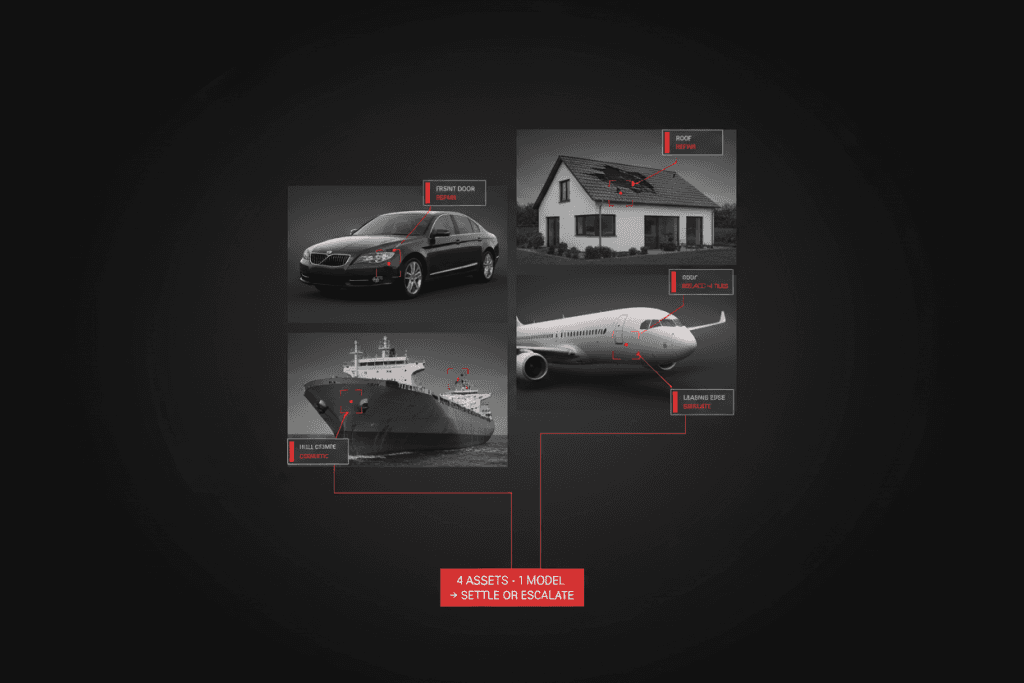
- Asset classes. If you also write property, fleet or commercial lines, check whether the same platform can assess them. Vernier assesses motor, property and other asset classes on one model.
- Human review. Confirm how cases are routed to handlers and how those decisions feed back into the model.
Related reading: Can AI damage assessment replace insurance surveyors? · Car inspection software for insurance: buyer’s checklist · Vernier: AI damage assessment for insurers
Common questions
What is AI vehicle damage assessment?
Software that uses computer vision to find and grade damage on a vehicle from photos or video, and turns it into a repair-or-replace decision and often a cost estimate. Motor insurers use it for pre-inspection before issuing a policy and for claims at first notice of loss.
Which insurers use CamCom for AI damage assessment?
Published deployments include HDFC ERGO, Bajaj Allianz, SBI General, PT Zurich Asuransi Indonesia, ERGO Insurance Thailand, ERGO Group in the Baltics and Fairfirst Insurance in Sri Lanka.
How accurate is AI damage assessment?
It depends on capture quality and on how well the model has been validated on the insurer’s own vehicles. In CamCom’s published deployments, HDFC ERGO reported mean accuracy rising from 83% to 98%, and Zurich Indonesia reported 93% damage assessment accuracy.
Does AI damage assessment replace surveyors?
For simple, clearly photographed cases it can remove the need for a surveyor visit. Complex claims, suspected fraud and injury cases still go to people, and a good system routes them there.
How long does an AI vehicle inspection take?
A guided self-inspection on a phone usually takes a few minutes. HDFC ERGO cut break-in inspection from 8 hours to 5 minutes, and Zurich Indonesia reports under five minutes end to end.
Sources: CamCom case studies: HDFC ERGO, Bajaj Allianz, SBI General, Zurich Asuransi Indonesia. Tractable, GEICO partners with Tractable, 26 May 2021. CCC, Data + AI solutions for insurance and collision repair. Solera, Solera unveils web browser-based Intelligent Triage, 12 July 2023.