Claims automation: what can be automated today, and what can’t
Claims automation means using software, rules and AI to move an insurance claim from first notice of loss to payment with as little manual handling as possible. Today the steps that automate reliably are intake, evidence capture, policy checks, damage assessment on simple claims, fraud screening and payment within set limits. Injury, disputed liability, large losses and anything the system is unsure about still need people. The measure that matters is straight-through processing (STP): the share of claims that complete with no human touch at all.
What can be automated today, step by step
1. First notice of loss
The claim is reported through an app, web form or chat instead of a phone call, with policy details filled in automatically. The gain is structured data from the start, so nothing downstream has to be re-keyed.
2. Evidence capture
Instead of sending a surveyor, the insurer asks the policyholder, a workshop or a loss adjuster to capture photos or video through a guided app. At Zurich Asuransi Indonesia, a claim can be raised by the customer, the loss adjuster or the workshop, and capture runs through the same guided tool in every case (Zurich Indonesia case study).
3. Coverage and policy checks
Rules confirm the policy was in force on the date of loss, the damage is covered, and the deductible and limits that apply. These are deterministic checks and automate well, provided the policy data is clean.
4. Damage assessment
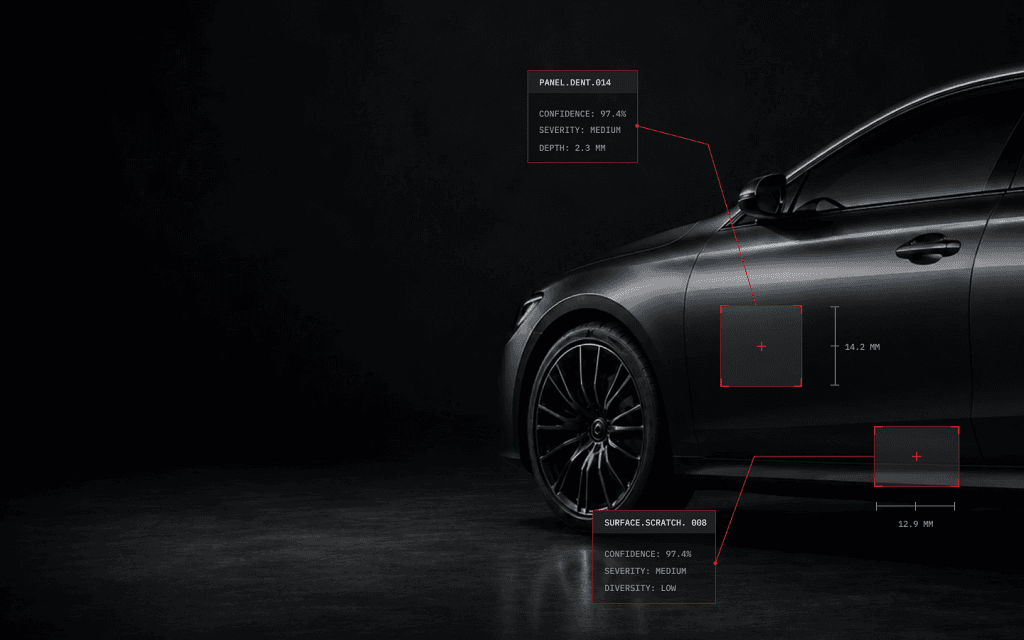
For vehicles, AI identifies each damaged part from the images, grades the severity and recommends repair or replacement. That output has to flow into estimating without anyone re-typing it. At Zurich Indonesia, the AI’s part-level assessment feeds the insurer’s systems, which calculate the cost automatically so the claim can be settled straight away.
5. Fraud screening
Fraud is why claims can’t simply be paid on request. The Coalition Against Insurance Fraud estimates fraud costs the US $308.6 billion a year across all lines, $45 billion of it in property and casualty insurance. Image manipulation is a growing part of it: in Verisk research published in March 2026, 99% of insurers said they had encountered manipulated or AI-altered documentation, and Aviva said in June 2026 that a growing number of claims, particularly in motor, are supported by AI-generated images.
Automated screening checks that images were captured live, at the right place and time, of the right vehicle, and compares each claim with earlier inspections and claims. Suspicious claims should go to investigators rather than being rejected automatically.
6. Decision and payment
A rules engine decides what happens next: approve, reject or refer to a handler. Core platforms build this in. Duck Creek, for example, describes configurable STP that handles standard personal auto renewals, quotes and claims automatically. In 2024 Duck Creek partnered with CamCom to bring AI visual inspection into its claims management offering across Asia-Pacific.
What still needs people
- Bodily injury. Medical evidence, treatment and negotiation are judgement work.
- Disputed liability. Who caused an accident turns on statements and circumstances that photos don’t settle.
- Large losses above regulatory thresholds. In India, motor losses of ₹50,000 or more must be assessed by a licensed surveyor, and AI prepares the evidence they work from. Below that line, the government told Parliament in December 2025 that insurers are already using app-based methods with AI-driven assessment. See Can AI damage assessment replace insurance surveyors?
- Low-confidence cases. When the evidence is incomplete or the model is unsure, the claim should go to a person, with the evidence already organised.
- Customers who need help. Vulnerable customers and complaints need a person who can use discretion.
Straight-through processing: the number that matters
STP is an unforgiving measure. A claim either completes without a human touch or it doesn’t, and a process that is 90% automated earns no credit if someone still has to re-key the assessment into another system. That is why integration matters as much as the AI.
When SBI General set out to modernise motor claims, CamCom’s assessment had to work inside a claims workflow built by a third party and feed its estimating data directly. The result was more than 50% straight-through processing on claims, removing the survey cost from more than half the claim volume (SBI General case study). At Bajaj Allianz, the assessment runs inside the app its surveyors already used, and claims under ₹50,000 now settle within the timelines IRDAI requires (Bajaj Allianz case study).
How to measure claims automation
- STP rate: claims completed with no human touch, as a share of all claims of that type
- Cycle time: first notice of loss to payment, by claim type
- Referral rate: how often the system hands a claim to a person, and why
- Accuracy against an expert: a regular sample of automated decisions reviewed by experienced handlers
- Reopened claims and complaints: the cost of getting it wrong
Where to start
- Pick one claim type with volume and low complexity. Motor own-damage claims below the survey threshold are the usual first choice.
- Fix capture first. Guided, live capture gives the AI usable evidence and shuts out recycled or edited photos.
- Integrate with estimating and payment before measuring STP. An assessment that has to be re-keyed doesn’t count.
- Write the referral rules with your claims team, so they trust what the system settles on its own.
For insurers, CamCom offers claims assessment as part of Vernier by CamCom: AI damage assessment from pre-inspection through claims and settlement, delivered into the claims systems you already use.
Common questions
What is claims automation?
The use of software, rules and AI to move an insurance claim from first notice of loss to payment with as little manual handling as possible: digital intake, guided photo capture, automated policy checks, AI damage assessment, fraud screening and rules-based approval and payment.
What is straight-through processing in insurance claims?
Straight-through processing (STP) means a claim completes from report to payment with no human intervention. The STP rate, the share of claims that do this, is the main measure of how automated a claims operation really is.
Which insurance claims can be fully automated?
Simple, low-value claims with clear evidence, such as minor motor own-damage claims below regulatory survey thresholds. SBI General reached more than 50% straight-through processing on motor claims assessed with CamCom.
Does claims automation replace claims handlers?
No. It takes the routine work off them. Injury, disputed liability, large losses and low-confidence cases still go to people, who start with the evidence already organised.
Related reading: AI in insurance: where it works today in underwriting and claims · Car insurance inspection: how AI self-inspection apps work
Sources: Coalition Against Insurance Fraud, The Impact of Insurance Fraud on the U.S. Economy, 2022. Verisk, AI editing tools are fueling a new era of insurance fraud, 17 March 2026. Aviva, Aviva stops record levels of claims fraud, 8 June 2026. Duck Creek, personal auto solutions. IRDAI, Master Circular on Protection of Policyholders’ Interests, 2024. Press Information Bureau, written reply to Parliament, 16 December 2025. CamCom case studies: SBI General, Bajaj Allianz, Zurich Asuransi Indonesia.