Car insurance inspection: how AI self-inspection apps work
A self-inspection app turns a car insurance inspection into something the policyholder does on their own smartphone, in minutes, instead of waiting for a surveyor. The app guides them around the vehicle and captures photos or video live. AI then checks the car’s identity, finds and grades any damage, and returns a condition report the insurer uses to issue or renew the policy. Done well, it replaces a surveyor visit that can take hours or days to arrange, and it leaves a dated record of the car’s condition at the start of cover.
When insurers ask for a car insurance inspection
In India, HDFC ERGO lists five situations where it inspects a car before cover is issued:
- The policy has lapsed. If you don’t renew on time, the car must be inspected before the policy can be renewed. Insurers call this a break-in.
- After an accident, before repairs, with a post-repair inspection afterwards.
- Moving from third-party to comprehensive cover.
- A change of ownership, when you buy a used car and want to keep its existing insurance.
- A bi-fuel kit is fitted.
Renew on time with no gap in cover and no inspection is needed. HDFC ERGO also notes that third-party-only cover doesn’t require one.
Some markets write the inspection into law. In New York, Regulation 79 requires an inspection before a new policy provides physical damage cover for a private passenger car, with photographs of the front, back and both sides of the car and a legible close-up of the vehicle identification number (VIN). If the car isn’t made available for inspection, physical damage cover is suspended after 14 calendar days. Since a 2023 law, insurers may choose to waive the inspection; that provision runs until 1 October 2027.
How a self-inspection app works, step by step
- The invitation. The policyholder opens the insurer’s app, or receives a link. At Zurich Asuransi Indonesia, CamCom’s system generates an encrypted link tied to that customer, which can go to the customer, the agent or the broker.
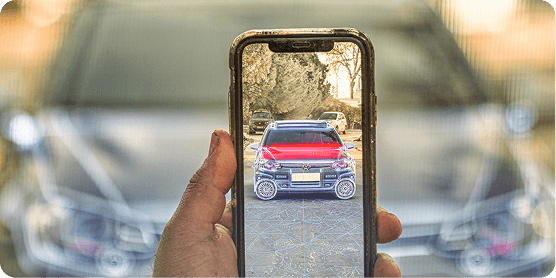
- Guided capture. On-screen outlines (stencils) and voice instructions show where to stand and what to frame, panel by panel. HDFC ERGO’s app asks for a 360° video of the car.
- Checks while capturing. The app flags problems as they happen, such as a missed angle, a cropped image, the wrong side of the car or poor lighting, so the customer fixes them before submitting rather than being asked to start again.
- Identity checks. The VIN or chassis number and the odometer reading are captured and checked against the policy.
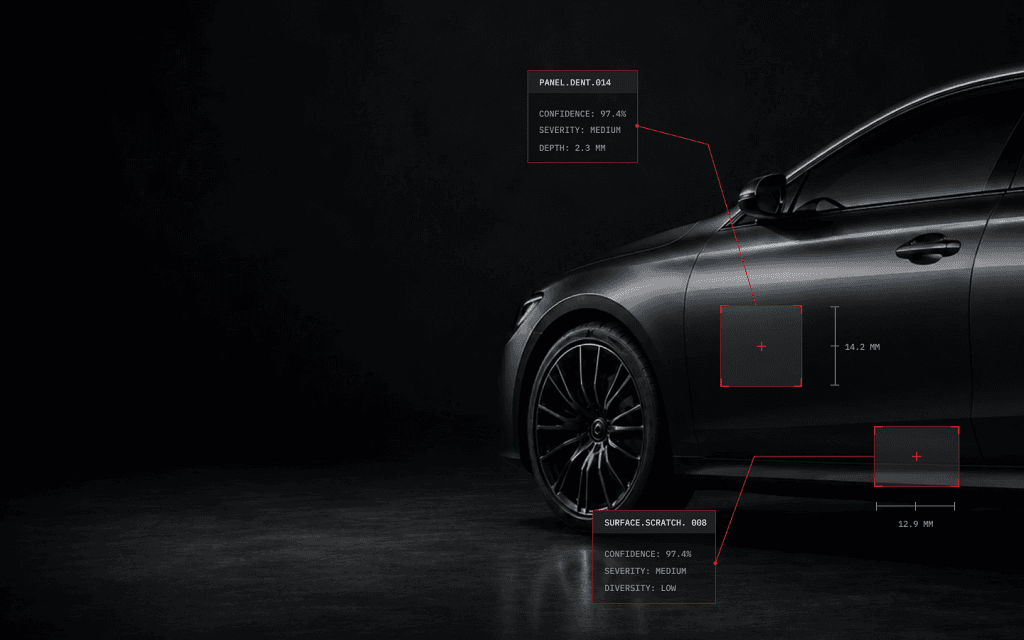
- AI damage assessment. The AI finds damage on each external panel, records where it is and what kind it is, and grades its severity.
- The decision. Rules set by the insurer approve the proposal, reject it or refer it to an underwriter. At HDFC ERGO, the AI’s vehicle health score feeds the premium, so the policy can be renewed straight away.
- The record. Photos, findings and time stamps are stored as a dated record of the car’s condition when cover started.
What the AI checks
- Completeness: every required angle captured, in focus, well lit and uncropped
- Identity: the VIN or chassis number and odometer match the vehicle on the policy
- Damage: dents, scratches, cracks and broken parts, located by panel and graded by severity
- Authenticity: the images were taken live, at the expected place and time, and have not been edited
- Change over time: differences from any earlier inspection of the same car
How self-inspection apps stop photo fraud
Letting the customer take the photos only works if the photos can be trusted, and image fraud is rising. In Verisk research published in March 2026, 99% of insurers said they had encountered manipulated or AI-altered documentation, and 36% of consumers said they would consider digitally altering a claim image or document. Allianz UK reported in June 2026 that fraudsters take photos of vehicles posted online and use AI to add damage for fake claims.
The controls that work sit in the capture process, not after it:
- Live capture only. No uploads of photos taken earlier or saved in the phone’s gallery.
- Location and time checks. Geotagging, geofencing and timed sessions show where and when each image was taken.
- VIN verification, so the car photographed is the car insured.
- Comparison with earlier inspections. A delta report shows what changed between two inspections of the same car, so damage that existed before cover started can be excluded from a later claim.
What self-inspection delivers for insurers
HDFC ERGO uses CamCom for break-in inspections, where the policyholder inspects the car through a mobile app with stencils and voice instructions. Between FY21 and FY24, inspection time fell from 8 hours to 5 minutes, inspection volume grew from 52,819 to 196,619, and mean accuracy rose from 83% to 98% (HDFC ERGO case study).
At Zurich Asuransi Indonesia, assessment takes under 5 minutes from capture to decision, with 93% accuracy on damage assessment in that market (Zurich Indonesia case study). In the Baltics, ERGO Group customers photograph the vehicle or home before cover starts, and any damage that already exists is documented so it can be excluded later (ERGO Group rollout).
Where self-inspection is limited
Rules decide who may do the inspection. New York’s regulation defines the insurer’s authorised representative as someone other than the insured, so a policyholder cannot currently inspect their own car there. A bill introduced in the New York Assembly in January 2025 (A3367) would let insurers accept self-inspections, with the insured submitting colour photos carrying date and time metadata and certifying the inspection form under penalty of perjury. It was still in committee when we published this article.
Self-inspection also has practical limits. It assesses what a camera can see on the outside of the car; mechanical condition and underbody damage need a different inspection. And claims above set thresholds still need a person: in India, motor losses of ₹50,000 or more must be assessed by a licensed surveyor, as we explain in Can AI damage assessment replace insurance surveyors?
Tips for a smooth self-inspection
- Do it in daylight or a well-lit space, with room to walk all the way round the car
- Rinse off heavy dirt or mud, which can hide or look like damage
- Keep the registration certificate to hand for the VIN or chassis number
- Follow the on-screen outline for each panel, and don’t skip the corners, roof edge or bumpers
- Hold the phone steady and take your time; a retake costs a few seconds, a rejected inspection costs a day
For insurers, CamCom provides this through Vernier by CamCom and its TriNetra guided capture tool, which runs on any smartphone. See AI damage assessment for insurers.
Common questions
Can I do my own car insurance inspection?
In many markets, yes. In India, insurers such as HDFC ERGO let policyholders inspect their own car through an app, for example by recording a 360° video for a lapsed policy. In New York, the inspection must currently be done by the insurer’s authorised representative, who cannot be the insured.
How long does a car insurance self-inspection take?
Usually a few minutes. At HDFC ERGO, inspection time fell from 8 hours to 5 minutes with AI self-inspection, and Zurich Asuransi Indonesia completes the assessment in under 5 minutes from capture to decision.
When is a car insurance inspection required?
Typically when a policy has lapsed, when moving from third-party to comprehensive cover, when buying a used car and keeping its insurance, after an accident and when a bi-fuel kit is fitted. Renewing on time usually avoids an inspection.
What happens if the inspection finds damage?
The damage is recorded as existing before cover started, so it can be excluded from a later claim. Depending on the insurer’s rules, the proposal may also be referred to an underwriter or the premium adjusted.
Can an inspection app detect edited photos?
The strongest protection is live capture: the app accepts only photos taken during the session, with location and time checks, so old or edited images cannot be uploaded. Authenticity checks and comparison with earlier inspections add further protection.
Related reading: AI in insurance: where it works today in underwriting and claims · Claims automation: what can be automated today, and what can’t
Sources: HDFC ERGO, Car insurance self inspection process and Self-inspection app for easy vehicle insurance renewal. New York State Department of Financial Services, Insurance Regulation 79 (11 NYCRR 67), including section 67.5 and section 67.1. New York Senate, S5889 (Chapter 638 of the Laws of 2023) and Assembly bill A3367. Verisk, AI editing tools are fueling a new era of insurance fraud, 17 March 2026. Allianz UK, Posting car photos fuels fraud, 5 June 2026. CamCom case studies: HDFC ERGO, Zurich Asuransi Indonesia.