AI in insurance: where it works today in underwriting and claims
AI in insurance works best today on narrow, high-volume decisions that used to need someone to go and look: inspecting a vehicle or home before cover starts, assessing damage on a claim, checking that the photos are genuine, and settling simple claims without anyone touching them. It is weaker, and more tightly regulated, where a decision turns on judgement about people, such as injury, liability or the price of someone’s life or health cover. In CamCom’s deployments, insurers started with one of the narrow decisions and measured it on their own book before widening it.
Where AI already works in insurance
Five jobs account for most of the AI we see running in production at insurers, as opposed to in pilots.
1. Pre-inspection and underwriting
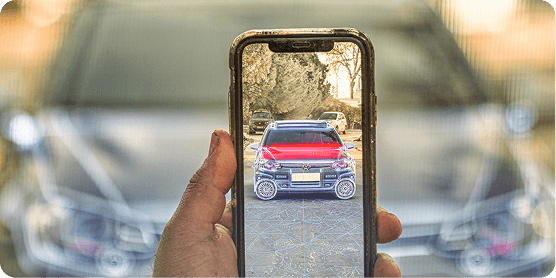
Before cover starts, or restarts after a lapse, the insurer needs to know what condition the vehicle or property is in. AI-guided self-inspection replaces the surveyor visit: the customer films or photographs the asset on a smartphone, and the AI returns a condition report that feeds the underwriting decision and the premium.
HDFC ERGO uses this for break-in inspections, the mandatory check before a lapsed motor policy can be renewed. Between FY21 and FY24, inspection time fell from 8 hours to 5 minutes, volume grew from 52,819 to 196,619 inspections, and mean accuracy rose from 83% to 98% (HDFC ERGO case study). At Zurich Asuransi Indonesia, a rules engine uses the AI’s damage report to approve, reject or refer each proposal to the underwriting team (Zurich Indonesia case study). We explain the customer side in how AI self-inspection apps work for car insurance.
2. Damage assessment on claims
On a motor claim, the AI identifies each damaged part from photos, grades the severity and recommends repair or replacement. The output only saves time if it lands in the system that prices the repair. At SBI General, CamCom’s assessment feeds a third-party estimating tool directly, and more than 50% of claims assessed this way go through without human intervention (SBI General case study). Bajaj Allianz has run the same kind of assessment inside its own surveyor app since February 2019 (Bajaj Allianz case study).
3. Fraud screening and image integrity
Photo-based claims created a new fraud problem: edited photos. In Verisk research published in March 2026, 99% of insurers said they had encountered manipulated or AI-altered documentation. Allianz UK reported in June 2026 that fraudsters take photos of vehicles posted online and use AI to add damage for fake claims. Aviva said it uncovered more than 18,400 suspect claims worth £233m in 2025, and that a growing number are supported by AI-generated images and manipulated documents, particularly in motor.
The strongest defence sits at capture rather than analysis: accept only photos taken live in the app, check location and time, verify the vehicle identification number, and compare each claim with earlier inspections of the same vehicle.
4. Straight-through processing
Straight-through processing (STP) means a claim or renewal completes with no human touch at all. Core platform vendors now build it in: Duck Creek describes configurable STP that handles standard personal auto renewals, quotes and claims automatically. AI damage assessment widens what counts as a standard claim, because the evidence no longer needs a person to review it. Our guide to claims automation covers which steps automate well and which don’t.
5. Property and home
The same approach is spreading beyond motor. In the Baltics, ERGO Group customers applying for motor or homeowners’ insurance photograph the vehicle or home on a smartphone; the AI records the position, nature and severity of any damage and checks whether each image is authentic. Damage that exists before the policy starts is documented, so it can be excluded if a claim is made later (ERGO Group rollout).
Where people still make the call
- Injury and liability. Who caused an accident and how badly someone was hurt depend on statements, medical evidence and negotiation, not on what a photo shows.
- Large or disputed losses. In India, motor losses of ₹50,000 or more must be assessed by a licensed surveyor. AI prepares the evidence the surveyor works from. We cover where that line falls in Can AI damage assessment replace insurance surveyors?
- Low-confidence cases. A well-designed system refers a case to a person when its confidence is low, instead of forcing a decision. The referral rules matter as much as the model.
- Pricing life and health cover for individuals. This is where regulators draw the hardest line, as the next section shows.
What regulators expect
United States. The National Association of Insurance Commissioners adopted a model bulletin on insurers’ use of AI systems in December 2023. It expects insurers to maintain a written programme for the responsible use of AI, covering governance, risk management and controls. By August 2026, more than 20 states and Washington DC had adopted it.
European Union. The AI Act classes AI systems used for risk assessment and pricing of individuals in life and health insurance as high-risk (Annex III). Motor and property damage assessment is not on that list.
India. IRDAI’s 2024 Master Circular on policyholder protection sets the ₹50,000 survey threshold for motor claims. In a written reply to Parliament in December 2025, the government said insurers are using app-based methods with AI-driven assessment for claims below it.
The common thread is traceability. Whatever the market, you should be able to show an auditor the images behind every decision and where a person reviewed it.
How to start with AI in insurance
- Pick one decision with volume and a clear right answer. Break-in inspections and motor claims below the survey threshold are typical first choices.
- Measure it in production, on your own book. Ask for accuracy on each task separately: finding damage, locating it, grading severity and pricing the repair.
- Protect capture before you trust analysis. If customers can upload old or edited photos, the accuracy of the model is irrelevant.
- Integrate where the decision is made. An assessment that has to be re-keyed into the claims or policy system adds work instead of removing it.
- Write the referral rules before go-live. Decide which cases the AI may settle, which it must refer, and who reviews the referrals.
For insurers, CamCom offers this as Vernier by CamCom: AI damage assessment from pre-inspection through claims and settlement, using photos and video captured on any smartphone.
Common questions
How is AI used in insurance?
Mostly for decisions that depend on looking at something: inspecting vehicles and homes before cover starts, assessing damage on claims, checking that photos are genuine and settling simple claims automatically. Insurers also use it in pricing, customer service and document handling.
How is AI used in insurance underwriting?
In motor insurance, AI-guided self-inspection lets the customer photograph or film the vehicle, and the AI produces a condition report that feeds the underwriting decision and the premium. HDFC ERGO uses this for break-in inspections on lapsed policies.
Can AI settle insurance claims without a person?
For simple claims within set rules, yes. At SBI General, more than 50% of motor claims assessed with CamCom go through without human intervention. Injury, liability disputes and large losses still go to people, and in India motor losses of ₹50,000 or more need a licensed surveyor.
Is AI in insurance regulated?
Yes. In the US, more than 20 states and Washington DC have adopted the NAIC model bulletin on insurers’ use of AI. The EU AI Act treats AI used to assess risk and price life and health cover for individuals as high-risk. In India, IRDAI rules require a licensed surveyor for motor losses of ₹50,000 or more.
Related reading: Claims automation: what can be automated today, and what can’t · Car insurance inspection: how AI self-inspection apps work
Sources: NAIC, Model Bulletin: Use of Artificial Intelligence Systems by Insurers, adopted 4 December 2023, and adoption map (as of 31 August 2026). EU AI Act, Annex III, point 5(c). IRDAI, Master Circular on Protection of Policyholders’ Interests, 2024. Press Information Bureau, written reply to Parliament, 16 December 2025. Duck Creek, personal auto solutions. Verisk, AI editing tools are fueling a new era of insurance fraud, 17 March 2026. Allianz UK, Posting car photos fuels fraud, 5 June 2026. Aviva, Aviva stops record levels of claims fraud, 8 June 2026. CamCom case studies: HDFC ERGO, SBI General, Bajaj Allianz, Zurich Asuransi Indonesia.