Facility management: what FM teams inspect, and how continuous monitoring changes audits
Facility management (FM) is the work of keeping buildings and the services inside them safe, compliant and fit for the people who use them. ISO defines it as the organisational function that integrates people, place and process within the built environment, to improve the quality of life of people and the productivity of the core business. Most of an FM team’s control comes from inspections: planned maintenance rounds, compliance checks, condition surveys, cleaning audits and contractor checks. Their weakness is that each one is a snapshot. Continuous monitoring on the cameras a building already has can fill the gaps between them.
What facility management covers
The ISO definition above comes from ISO 41011, the facility management vocabulary standard, first published in 2017. The UK’s professional body for FM adopted it formally the same year. ISO 41001:2018 then set out the requirements for an FM management system.
In practice, FM work is usually split in two:
- Hard FM: the building’s physical assets and systems. Heating, ventilation and air conditioning, electrical and plumbing systems, lifts, fire safety systems and the building fabric.
- Soft FM: the services that make the building usable. Cleaning, security, waste management, pest control, catering, reception and grounds.
The same discipline runs offices, hotels, hospitals, airports, malls, campuses and industrial sites. The assets differ; the job of proving that everything is working, clean and safe doesn’t.
The inspections FM teams run
1. Planned preventive maintenance (PPM)
Scheduled tasks on each asset, at set intervals, before something fails: filters changed, belts checked, systems tested. In the UK, the benchmark for building maintenance specification is SFG20, created in 1990 by the Building Engineering Services Association (BESA), which turns legislation and standards into maintenance schedules.
2. Statutory and safety compliance checks
Fire extinguishers, emergency exits, alarms and signage checked against the audit standard that applies to the building. Missing or blocked safety equipment is the kind of finding that fails an audit outright.
3. Asset condition surveys
Leaks, damage, wear and tear on the building fabric and fixtures, recorded so repairs can be planned and budgeted before they become emergencies.
4. Cleaning and public-area audits
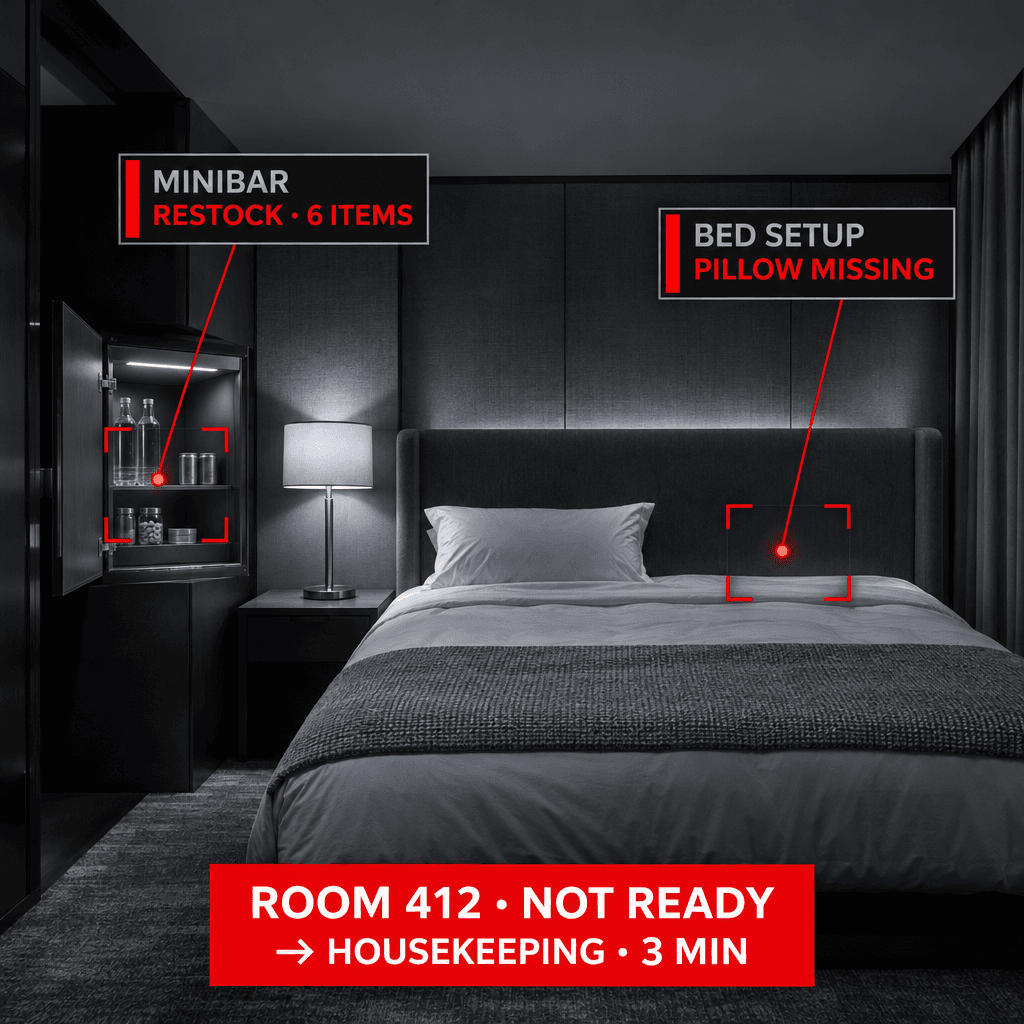
Lobbies, restrooms, corridors and lifts checked for cleanliness and stock: dispensers filled, bins emptied, floors dry. In hotels this extends to room readiness before guest arrival.
5. Contractor and permit compliance
Whether contractors on site wear the right PPE, keep work areas safe and work within their permits.
6. SOP and brand-standard audits
Opening and closing checklists, signage, uniforms and process steps checked against the operator’s own standard. Hotels, restaurants and retail chains run these across every site.
Reactive, planned, condition-based and predictive maintenance
Most FM teams combine four approaches:
- Reactive: fix it when it breaks or someone reports it.
- Planned preventive: service it on a schedule, whatever its condition.
- Condition-based: service it when an inspection or a sensor shows it needs it.
- Predictive: use data trends to service it just before it would fail.
Moving work from the first approach towards the last three needs one thing above all: earlier, more reliable evidence of the condition of each asset and area.
Where inspections fall short
An inspection proves the space was right when the inspector walked through it. It says nothing about the lobby an hour later, the restroom at the evening peak or the loading bay on the night shift. The issues that matter most to occupants and auditors, such as a spill with no warning sign, a blocked fire exit, an empty dispenser or a contractor without a harness, tend to appear and disappear between rounds.
Three other gaps are common:
- Coverage. Large or multi-site portfolios can only be sampled, not inspected in full.
- Evidence. Paper or app checklists record a tick, not proof of what the inspector actually saw.
- Follow-through. A finding that doesn’t become a work order the same day tends to be found again at the next inspection.
How continuous visual monitoring changes FM audits
Most facilities already have CCTV, used for security and reviewed only after an incident. The same feeds can be read continuously for operational events, so the inspection runs all day instead of once.
Vigil by CamCom does this for hotels and facilities. It covers ten operational scenarios across eight types of environment, including:
- public area cleanliness and stock
- facility maintenance: leaks, damage and wear
- safety equipment: extinguishers, exits, signage and alarms
- contractor compliance, including PPE and permits
- SOP adherence
- incident awareness: spills, hazards and unauthorised access
What changes for the FM team:
- Findings arrive with evidence. Each one is structured with the evidence, time, location and severity, not just a tick on a checklist.
- Findings go where the work happens. They flow into the systems the team already uses, such as Maximo, ServiceNow or another CMMS, so a finding becomes a work order rather than a report.
- It runs on what’s already installed. Vigil uses existing IP cameras and phones, with no new camera network.
- It watches events, not people. An on-site edge appliance processes the video locally, and raw video never leaves the building. Faces can be masked, and there is no identity recognition or tracking of individuals.
It doesn’t replace the rest of the FM stack. Vigil isn’t a building management system, a CMMS or an audit service. It supplies the visual evidence those systems and teams act on. See AI monitoring for hotels and facilities for how it works.
How to start
- Pick the failures that keep coming back. Two or three your inspections keep finding, or that occupants and auditors complain about.
- Measure a baseline with the inspection process you have today.
- Run monitoring on one site long enough to compare like for like. Vigil’s validation is designed to run in 30 days, from deployment and baseline to a decision on whether to scale.
Related reading: Hotel housekeeping checklist: what to check in every room
Common questions
What is facility management?
The organisational function that integrates people, place and process within the built environment, to improve the quality of life of people and the productivity of the core business. That is the ISO 41011 definition. In practice, it means keeping buildings and their services safe, compliant, clean and working.
What is the difference between hard FM and soft FM?
Hard FM covers the building’s physical systems, such as HVAC, electrical, plumbing, lifts and fire safety. Soft FM covers the services people use, such as cleaning, security, waste, catering and reception.
What does a facility manager inspect?
Planned maintenance tasks, statutory and safety equipment, asset condition, cleaning and public areas, contractor and permit compliance, and adherence to the operator’s own standards.
What is PPM in facility management?
Planned preventive maintenance: scheduled maintenance tasks carried out at set intervals to stop assets failing. In the UK, SFG20 from BESA is the benchmark for PPM schedules.
Can AI replace facility inspections?
Not entirely. AI monitoring on existing cameras can watch public and back-of-house areas continuously and send findings into work-order systems. Hands-on maintenance, testing and areas without cameras still need people.
Sources: ISO/TC 267, What is facility management (definition from ISO 41011; ISO 41001:2018). Workplace Insight, BIFM adopts ISO definition of facilities management, 3 August 2017. SFG20, Who are SFG20 and FAQs. CamCom, Vigil for hospitality and facilities.